

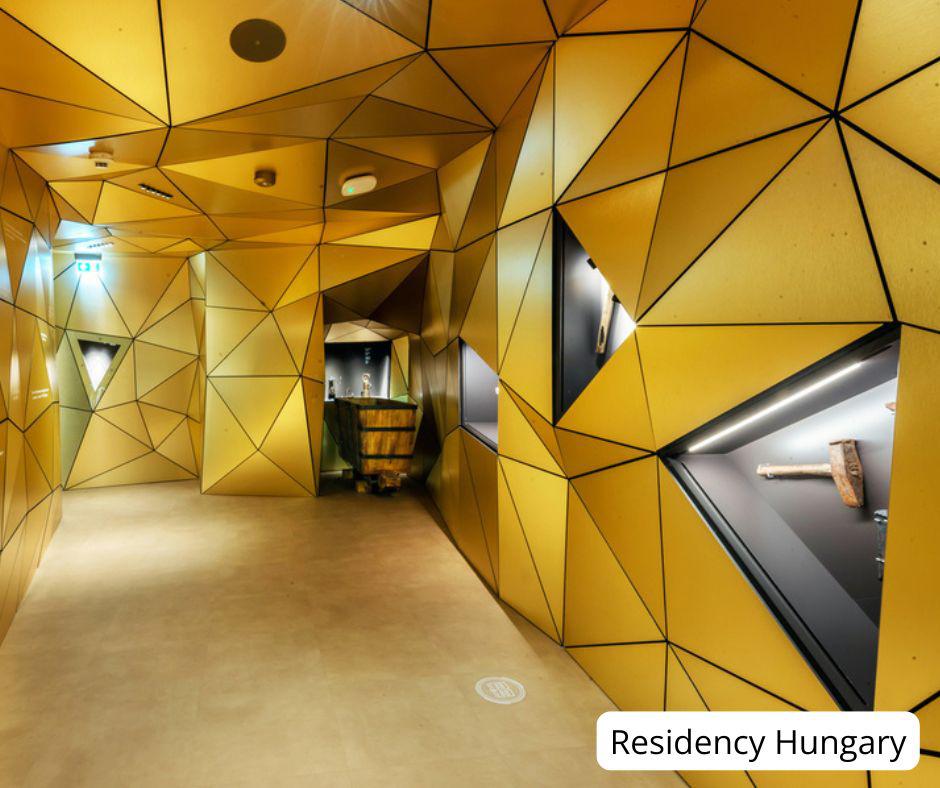
The Money Museum has organized its spaces to highlight the five key functions of money, providing visitors with an engaging and educational experience. The exhibition, which is free to view, helps guests understand their own involvement with money as well as the role of the central bank in the financial world.
Through interactive displays and historical artifacts, visitors can explore various aspects of money, including its function as a measure of value and its role as a means of payment and circulation.
The journey begins in the Gold Mine, where visitors can learn about the peak of precious metal mining in Hungary and the tools used to extract gold. As the experience continues, guests will encounter thought-provoking questions and explore how the form of money has changed throughout history.
The exhibition also examines the role of banks and financial intermediaries, showcasing the complex activities carried out by the central bank.
The golden train, titled "The Rumble," is a stunning indoor sculpture created by artist Gábor Miklós Szőke. It measures 13 meters in length and weighs 13 tons, consisting of approximately 7,000 hand-welded, gold-painted stainless steel rods. The sculpture begins inside the museum and breaks through the walls of the building, extending into Széll Kálmán Square.
This golden train sculpture references a true story from the end of World War II. Employees of the Hungarian National Bank fled from the invading Soviet forces on a train loaded with the bank's gold reserves, risking their lives to protect the country’s wealth. Thanks to their bravery and diplomatic efforts, the reserves, totaling more than 30 tons of gold, were returned to Hungary intact in 1946.
The Money Museum is located in the Postal Palace, a building designed by the renowned architect Gyula Sándy. Its architecture exemplifies a harmonious blend of traditional and modern elements.