

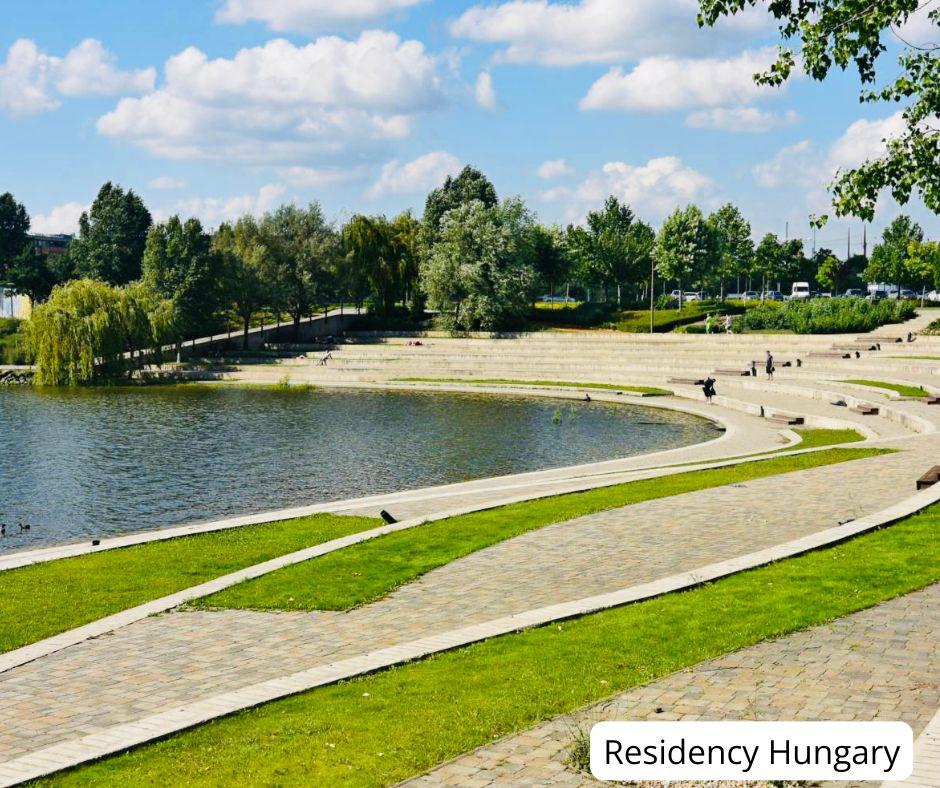
Kopaszi-gát is more than just a park; it is a testament to Budapest’s vision of sustainable urban living. By reimagining an overlooked area as a lively, community-focused destination, the city has created a space where history, modern design, and everyday life come together seamlessly.
Kopaszi-gát traces its origins back to the 19th century, when the shallow waters of Lágymányos Bay made the area particularly vulnerable to ice floods. In response, construction began in 1870 on a 3-kilometer-long parallel dam, completed in 1876. This intervention separated Lágymányos Lake from the Danube, significantly improving flood protection while quietly laying the foundation for the area’s future transformation.
That transformation began in earnest in the early 2000s, when local authorities and property owners embarked on an ambitious redevelopment project. By 2007, the former flood barrier and its surroundings had evolved into one of Budapest’s most modern and beautifully landscaped public parks. The architectural language of the area reflects a thoughtful dialogue with nature: wood, glass, metal, and concrete are used in clean, contemporary forms, while expansive windows dissolve the boundary between indoors and outdoors, inviting visitors to remain connected to the natural setting.
Across the bay, the emerging BudaPart district is redefining the area’s urban character, offering a dynamic mix of residential spaces, offices, and leisure facilities. Among its standout attractions is Flava Beach, opened in 2024. This natural waterfront destination brings a fresh dimension to city life, featuring sports facilities, sandy lounging areas, a cocktail bar, a playground, live music, and a vibrant calendar of summer events.
Within easy reach lies the Budapest University of Technology and Economics, a historic institution renowned for its academic excellence. Its elegant buildings and state-of-the-art facilities contribute to the intellectual and cultural atmosphere of the neighborhood.
Spanning the Danube nearby, the Rákóczi Bridge has been a defining feature of Budapest’s modern skyline since 1995. From its vantage point, visitors are treated to sweeping panoramic views of the river and the city - a perspective that captures Budapest at its most impressive.
Whether you come to unwind by the water, immerse yourself in nature, or indulge in culinary delights, Kopaszi-gát offers a uniquely enriching experience for every visitor.